The Beast and the Great City

Bob Turner
January 22, 2026
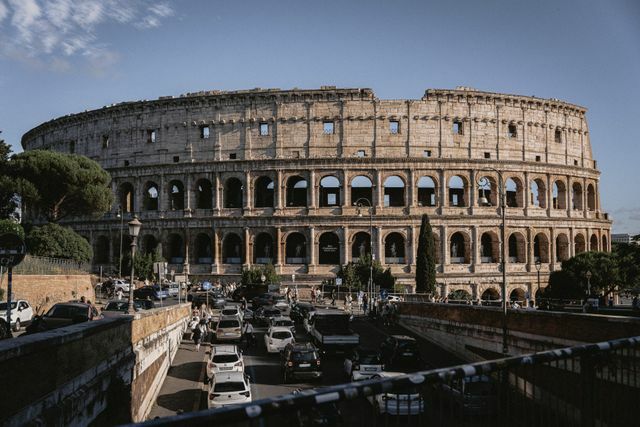
Read Revelation 18:11–20.
This passage from Revelation finds us in the middle of a chapter-long lament over the great city “Babylon”—a metaphorical stand-in for the Roman Empire. The first ten verses of Revelation 18 describe the arrogance and boasted invulnerability of Babylon and then describe her judgment by God. Verses 9–10 picture “the kings of the earth” standing at a distance and bemoaning the city’s fate, saying, “Alas, alas, the great city, Babylon, the mighty city! For in one hour your judgment has come.”
Verses 11–20 describe the incredible wealth of Babylon and list in great detail the merchandise she traded with the earth’s merchants, who say in words that echo those of the kings, “Alas, alas, the great city, clothed in fine linen, in purple and scarlet, adorned with gold, with jewels, and with pearls! For in one hour all this wealth has been laid waste!” (vv. 16–17). Similarly, all the seafarers engaged in trade with her offer their lament: “Alas, alas, the great city, where all who had ships at sea grew rich by her wealth! For in one hour she has been laid waste” (v. 19). As they watch Babylon burn they cry out, “What city was like the great city?” (v. 18).
Indeed, what city was like the great city of Babylon? What empire was like the great empire of Rome? I don’t imagine you will have to think very hard to come up with an answer to these questions. We citizens of the USA live in the equivalent of the Roman Empire; our economic power, our military might, and our overwhelming wealth are the envy of the world, and one can well imagine contemporary merchants and tradespeople looking at us and saying, “What nation is like the great nation?”
The funny thing is that a similar comment is made earlier in Revelation in a different context. After John describes a beast that rises up out of the sea and receives power from the dragon, or Satan, people are enthralled and fall down to worship the beast. They say, “Who is like the beast, and who can fight against it?” (Rev 13:4).
Although the language is coded, the meaning is clear: both the beast and the great city of Babylon represent Rome, and both receive their power from a satanic source. That is why a voice from heaven advises the people of God to get out of Dodge: “Come out of her, my people, so that you do not take part in her sins, and so that you do not share in her plagues; for her sins are heaped high as heaven, and God has remembered her iniquities” (Rev 18: 4–5).
How different is our attitude today! We understand America’s opulence and glory not as powers granted by the devil but as blessings from God. Too many Christians willingly swallow the lie that we live in a “Christian nation,” whatever that is supposed to mean. They conveniently ignore the rapacity of our forebears who stole an entire continent from its indigenous inhabitants and built a country using the unrequited toil of millions of enslaved human beings. These Christians become indignant when someone mentions systemic racism and white supremacy as present and ongoing evils. They deny that such a thing as white privilege even exists, despite the pile of evidence that grows higher all the time. They would not countenance the notion that our adventures abroad have been anything other than benevolent; they scoff at the idea that we have long rigged the rules of international trade to benefit ourselves and that we have used our military prowess many times to secure natural resources such as petroleum and to impose a system of economic colonization throughout the global South. To these patriotic Christians we are a shining city on a hill, a beacon of freedom and prosperity for the whole world to emulate.
That’s the essence of Christian nationalism, and I don’t suppose I have to tell you that I consider it a festering sore on the Body of Christ. As followers of Jesus we need to practice critical thinking when it comes to our nation and its mythology. If we are unable to separate our faith from our citizenship, how will we hear and respond to the call to “come out of her . . . so that [we] do not take part in her sins”? When we look at the American Empire and find ourselves saying, “Who is like us, and who can fight against us,” we need to remember what happened to the beast and the great city: God’s judgment came down and in one hour they were laid waste.
Let us put our trust not in riches or in power but only in the strong name of our Lord and Savior Jesus Christ, who conquers peaceably and brings life out of death.

-
Community UCC
-
Schwarzwald UCC
-
Trinity UCC
Office Hours
Contact
© 2026 Community UCC. All Rights Reserved.
|
Login
powered by
Website Developed by Tithely