Not Theirs

Bob Turner
February 5, 2026
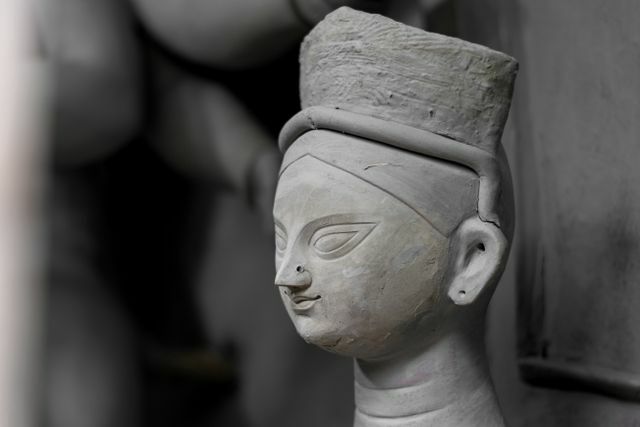
Isaiah 46 offers one of the most trenchant depictions of the emerging concept of monotheism to be found in the Hebrew Bible. Earlier in Israelite history the Hebrew religion was more henotheistic than monotheistic. Like mono-, the prefix heno- means “one”; henotheism is the worship of one god or goddess—in the Israelites’ case, Yahweh. The difference is that henotheists accept the reality of other gods, but pledge their allegiance to only one—consider the first commandment, “You shall have no other gods before [or possibly besides] me” (Exod 20:3)—whereas monotheists declare that only one God exists, and all other “gods” are merely idols.
That’s the argument the prophet makes in this passage written toward the end of the Babylonian Exile in the latter third of the sixth century BCE. Isaiah 46 is a polemical text meant to extol Yahweh’s power while mocking the supposed deities of Babylon. “Bel bows down, Nebo stoops, their idols are on beasts and cattle; these things you carry are loaded as burdens on weary animals” (v. 1) By contrast, Yahweh is the one who carries Israel: “Even when you turn gray I will carry you. I have made, and I will bear; I will carry and I will save” (v. 4). The Babylonians’ idols cannot even move on their own: “They lift it to their shoulders, they carry it, they set it in its place, and it stands there; it cannot move from its place (v. 7). Yahweh, on the other hand, has power and volition: “I have spoken, and I will bring it to pass; I have planned, and I will do it” (v. 11). The idols cannot save: “If one cries out to it, it does not answer or save anyone from trouble” (v. 7), but Yahweh is the true savior: “I bring near my deliverance, it is not far off, and my salvation will not tarry; I will put salvation in Zion, for Israel my glory” (v. 13).
What is it about idols—other “gods”—that fascinates us so? Why are we willing to give our devotion, time, and resources to so-called deities that cannot save? It’s important to note that the prophet is not writing to the Babylonians; he doesn’t really care about their worship practices. He is writing to his own people, Israelites who have turned away from the true God and given their worship to lesser divinities. We do the same thing. We are supposed to be God’s people, but we spurn what is best for us in favor of Money, Country, Party, Success, Power, and so on. We shunt aside the God of life and choose instead those things that only bring death. If not physical death, then the death of our souls, which is even worse.
In the Lord’s Prayer we say, “Thy kingdom come, thy will be done,” and, “For thine is the kingdom and the power and the glory forever.” When we pray these lines, we should always put the emphasis on “thy” and “thine,” because every affirmation of God is simultaneously a rejection of any and all other gods who dare to compete with God for our allegiance. “Thy” always includes “not theirs.”
Are there any gods to which you need to say, “Not yours”? I know I have a few. Let us be bold and faithful and put our trust in the God whom we cannot see but who sees us and looks on us always with fathomless love. Let us not be stubborn of heart, but rather give our worship solely to the one who can legitimately say, “I am God, and there is no one like me” (v. 9).

-
Community UCC
-
Schwarzwald UCC
-
Trinity UCC
Office Hours
Contact
© 2026 Community UCC. All Rights Reserved.
|
Login
powered by
Website Developed by Tithely