Ninevites, Then and Now

Bob Turner
February 19, 2026
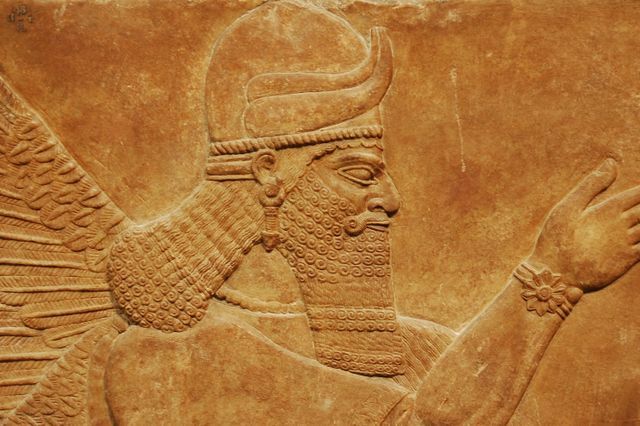
The Revised Common Lectionary’s daily reading for today is the third chapter of Jonah, but it’s such a short book, and such an entertaining story, that it’s worth your while to read the whole thing.
I’ll wait.
There are parts of the Bible that are clever or humorous, but Jonah is, I think, the only straight-up comic story in the whole collection. It has both subtle humor (the castor bean plant and the worm come to mind) and broader, almost slapstick comedy, as when the prophet tries to get out of doing his duty by getting himself thrown into the sea, but God says, in effect, “Oh, no, you don’t!” and sends a fish to swallow him and spit him out on dry land. The message is that you can run from God, but you can’t hide, and if you have a calling, you’d better just do what you’re told and stop fighting. As Rich Mullins once observed, “You can argue with your Maker, but you know that you just can’t win.” Jonah finds that out, and he stops arguing.
So he resolves to carry out his commission to preach to the people of Nineveh, but he doesn’t have to like it. He does the bare minimum, and he does it with a distinct lack of compassion. “Forty days more, and Nineveh shall be overthrown!” (v. 4), he declares. Jonah’s attitude toward Nineveh, which is the capital of the Assyrian Empire that has destroyed the kingdom of Israel, is angry and vindictive. For an accurate picture of his feelings about Nineveh and the Assyrians, read the brief but rage-filled book of Nahum. Jonah likely shares Nahum’s furious viewpoint. He wants Nineveh to be overthrown. He probably takes a grim joy in his terse pronouncement of doom on the city.
But then the unthinkable happens: the people of Nineveh repent! From the king on down to the lowliest citizen, they tremble at Jonah’s proclamation, put on sackcloth, and sit in ashes (sackcloth and ashes being time-honored symbols of sorrow and repentance). And the comedy just keeps coming: the king orders that even the animals shall fast and show signs of penitence. “By the decree of the king and his nobles: No human or animal, no herd or flock, shall taste anything. They shall not feed, nor shall they drink water. Humans and animals alike shall be covered with sackcloth, and they shall cry mightily to God. All shall turn from their evil ways and from the violence that is in their hands” (vv. 7–8). I guess it’s a sign of their sincerity that even the animals repent. But for what purpose? The writer answers that question in the next verse: “Who knows? God may relent and change [God’s] mind; [God] may turn from [God’s] fierce anger, so that we do not perish” (v. 9).
And guess what? It works! God does see their acts of repentance, their turning away from evil, and God changes the divine plan. The doom is suspended; the planned overthrow is canceled.
Jonah, of course, is completely hacked off by this development. When he learns that the destruction of Nineveh is called off, he throws a tantrum and says he is angry enough to die. Jonah and God go back and forth a little in chapter 4, with God trying to talk Jonah down from his ledge, but the book ends with an unanswered question. God says, “Should I not be concerned about Nineveh, that great city, in which there are more than a hundred and twenty thousand persons who do not know their right hand from their left and also many animals?” (4:11).
This is a story for our times. Who are our Ninevites? Who are the ones we long to see punished for their sins? Who are those we consider to be beyond the pale, the ones we would rather die ourselves than to see God favor? For some it’s the liberal elite, the “woke mob,” the ones who coddle illegal immigrants and trans people and generally spit in God’s face. For others it’s the ICE agent, the DHS secretary, the president and all those who prop up his immoral and authoritarian regime. Many people also have personal grudges—the woman who stole your husband and broke up your marriage; the former friend whose betrayal you can’t forgive.
Let us think clearly and identify our Ninevites, the ones we consider our enemies. And then let us do something truly radical: let us listen to Jesus and actually seek to love these enemies. We don’t have to like them or their actions, but we have an obligation to seek God’s best for them, to hope for their repentance and a turning from their evil, to pray for their welfare. Because guess what? God loves them, too.
At the end of Jonah comes the question whether God should be concerned for all the residents of Nineveh who don’t know which end is up. But today let us ask ourselves the other question that lies implicit in that one. Should we not be concerned for them, too?

-
Community UCC
-
Schwarzwald UCC
-
Trinity UCC
Office Hours
Contact
© 2026 Community UCC. All Rights Reserved.
|
Login
powered by
Website Developed by Tithely