Cornucopia

Bob Turner
November 27, 2025
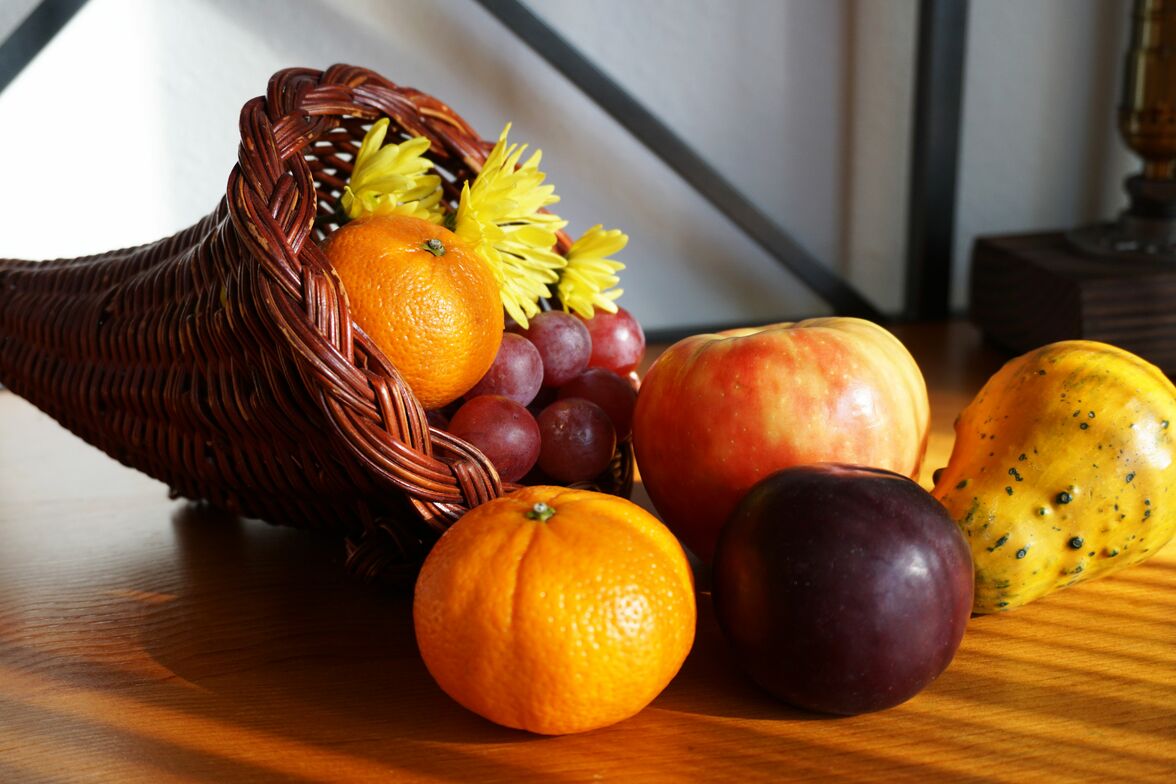
Here at the end of November I am reminded that this is a month of contradictions. Even as the trees begin to lose their leaves and the days grow steadily colder, we celebrate the abundance of harvest time. Today is a day we have set aside for offering thanks to God, while tomorrow it has become a tradition to bow before the god Mammon in an orgy of unrestrained consumption and spending. As our culture has become more and more dominated by the dictates of advertisers and profit-seekers, November (including Thanksgiving) has become a sort of placeholder—an ever briefer pause between the marketing bacchanals of Halloween and Christmas.
Meanwhile, in the church, November is a time of transition. The turning of the Christian year happens in November. Last Sunday we celebrated the universal reign of Christ and the consummation of all things, and this Sunday we begin the season of expectation—of Christ’s first and second advents—all over again. At the beginning of the month we remembered and honored the many saints who have gone before us and who now form the “great cloud of witnesses” described in the book of Hebrews. At the end of the month, as we embark on the season of Advent, we will contemplate and anticipate the time when we will join those saints at God’s great banquet table.
Also in November, our thoughts turn to one of the practical matters involved in “being church” together—namely, how do we pay for it? Fall is the season of budgeting and stewardship—words that strike either dread or ennui in the hearts of churchgoers everywhere. It doesn’t have to be that way, however. Finding the funds for our shared ministry together doesn’t have to resemble a root canal. It depends on how we look at the world.
If we see the world as a place of scarcity, budget decisions can easily become contentious. In a zero-sum game, there are always winners and losers and often hurt feelings and damaged relationships. If, on the other hand, we live in a world of abundance, it becomes easier for us to unclench the fists in which we grasp our wealth. When we recognize that all we have comes from God, and that God is ready, in the words of Ephesians, “to accomplish abundantly far more than all we can ask or imagine,” it becomes easier for us to share and to be generous.
It takes trust, of course. It takes courage to see the world in this way, especially when you consider that our entire economic system is based on a presumption of scarcity, and everyone—from financial planners to insurance companies to installers of security systems—continually preys on our insecurity about our possessions. But if we take that courageous step of faith, we may discover the great secret that what comes with open-heartedness and open-handedness is not destitution but freedom, community, and joy.
As we go through this season of stewardship, let us do so with our eyes to the future, with a focus on what our congregation has to offer our community, and how we can best use our shared resources to reach that community with the good news of God’s radically inclusive and superabundant love.

-
Community UCC
-
Schwarzwald UCC
-
Trinity UCC
Office Hours
Contact
© 2026 Community UCC. All Rights Reserved.
|
Login
powered by
Website Developed by Tithely