Breathe Deep the Breath of God

Bob Turner
June 18, 2026
As you know, the book of Genesis contains two distinct creation stories, one in chapter 1 and another in chapter 2. Both of them have their virtues, but they are very different in style and tone.
In the first creation account, a sense of majesty and distance prevails. God creates by word—God speaks, and the different constituent parts of creation come into being. The order is a bit odd in places; for instance, plants grow before the sun comes into being. But in other respects the arrangement is just right. God’s creation of light as the first of God’s acts reflects what science now tells us about how the universe began in an explosion of unfathomable proportions.
Seen in this light (no pun intended), the creation account in Genesis 1 is powerful and majestic. God is portrayed as a being of infinite dignity who uses the pronouns “we” and “us” as though God were a mighty king addressing his royal court. In this version God stays above the fray. The divine hands never get dirty.
Not so in chapter 2! This second creation story depicts a profoundly earthy deity; later we will witness God ”walking in the garden [of Eden] at the time of the evening breeze” (Gen 3:8) and conversing with the man and woman God has made as a friend talking to friends. It’s a picture of intimacy that offers a strong contrast to the dignified, aloof (by comparison) God of chapter 1.
If you want to talk about intimacy, you need look no further than the moment in verse 7 when God creates the first human being. The writer says that “God formed man from the dust of the ground.” The Hebrew word for “man” is adam, and it doesn’t take a genius to see the connection with the word “ground,” which in Hebrew is adamah. We humans have an intrinsic connection to the earth, which we see even in English, in the words “human” and “humus.” This truth gets reiterated every year on Ash Wednesday, when the minister draws a cross in ashes on our foreheads and intones, “Remember that you are dust, and to dust you shall return.” We are earthy; we come from the humus.
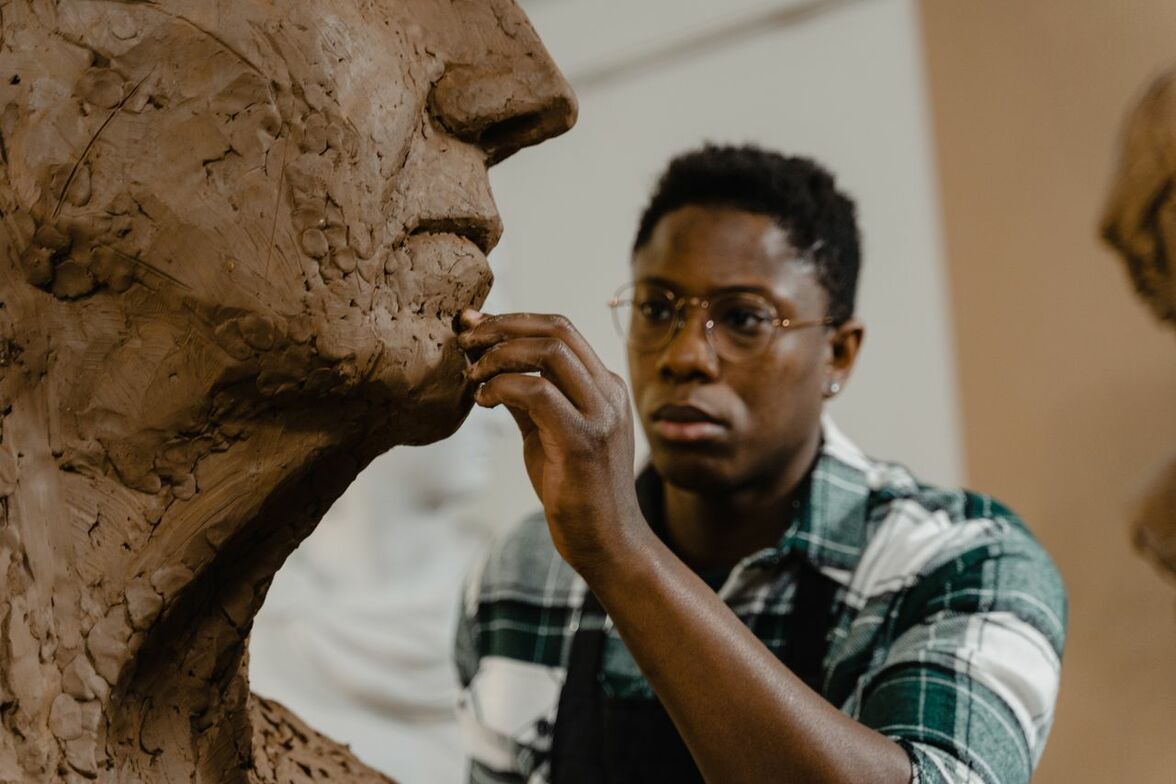
The picture I get in my mind’s eye when I read this verse is that of an anthropomorphic deity on hands and knees making mud pies. I imagine God spattered from head to toe with sticky clay as God really gets involved in the work of fashioning the soil into the shape of a person. But then the real moment of intimacy happens: God breathes into the man’s nostrils the breath of life.
Think about this for a moment. Imagine breathing your own breath into another person’s nostrils. What sensations would you experience? What tastes, smells, and sounds? How would you feel toward the being with whom you were connected in this very personal way? Would you feel proud? Attached? Protective?
Put yourself in God’s place. How do you imagine God feels about you, remembering this moment of deep closeness? Would it surprise you to find that God also feels a thoroughgoing sense of connection, a tender and proprietary interest in your welfare? God has, metaphorically if not literally, breathed God’s very breath into your lungs and given you life. How will you live in response to this knowledge? What difference can it make in the way you perceive your relationship with the Divine?
Let it make that difference. Let God’s breath enter you and change you this day forward.

-
Community UCC
-
Schwarzwald UCC
-
Trinity UCC
Office Hours
Contact
© 2026 Community UCC. All Rights Reserved.
|
Login
powered by
Website Developed by Tithely