Alchemy

Bob Turner
June 25, 2026
In my sermon last Sunday I made the comment that “God is the greatest humanist,” considering the way God fully enters into the human experience through the Incarnation. It seems I have some company in this idea. Pope Leo XIV this week, at a celebration of the 100th anniversary of the Vatican Publishing House, hosted a group of writers from all over the world, and in his address he quoted both ancient and modern thinkers to stress the importance of expressing our full humanity in relating to God. Timothy Radcliffe has said, “For Christians, nothing human is alien to Christ. Every attempt to grapple with the fundamental questions of our lives—how to love, how to be just, how to be free, how to face suffering and death—helps us to understand Christ, the one who is most human of all.” The pope also quoted ancient author Terence, who wrote, “I am a human being, and I do not regard anything human as alien to me.”
These thoughts fly in the face of what a lot of people seem to think. There is a strong thread of Christian thought that disparages our humanity, and it goes back a long way. From self-flagellating medieval monks to modern youth ministers who shame and threaten their young charges into the confines of a strict “purity culture” and then shame them further when they inevitably fail to fulfill its demands, we have long held that human flesh is somehow distasteful or shocking to God. One of the beautiful truths attendant on the doctrine of the Incarnation is that Jesus can readily join Terence in pronouncing that nothing human is alien to him.
The pontiff made his remarks on the nature of humanity in an address to this international group of writers, thanking them for bringing the full depth and breadth of the human experience to the page, expanding their readers’ humanity in the process. He also extolled writing as “an act of truth” because it reveals something essential about the world and about God. Even if God is not mentioned, the art of writing, when it is done well, brings us face-to-face with the divine, which happens when we again plumb the depths of our humanity. Leo said, “Writing…reveals who we are, what we believe and hope for, the world we strive toward, and the future of which we dream.” In all these things we approach the presence of the Humanist God.
Both the songs we have encountered so far in our “The Gospel in 4/4 Time” series have treated the subject of art. “Skin” did so directly, considering the example of Vincent Van Gogh and then extrapolating to all artists everywhere. “I Got a Name” was a little more oblique in its reference to art, but its strong defense of self-expression and freedom fit that discussion perfectly. Both songs offer encouragement to the musicians, writers, painters, and others who work in creative media. Stay the course, Mallonee and Croce tell us. Deal your best hand out in the marketplace. Sing your song loud.
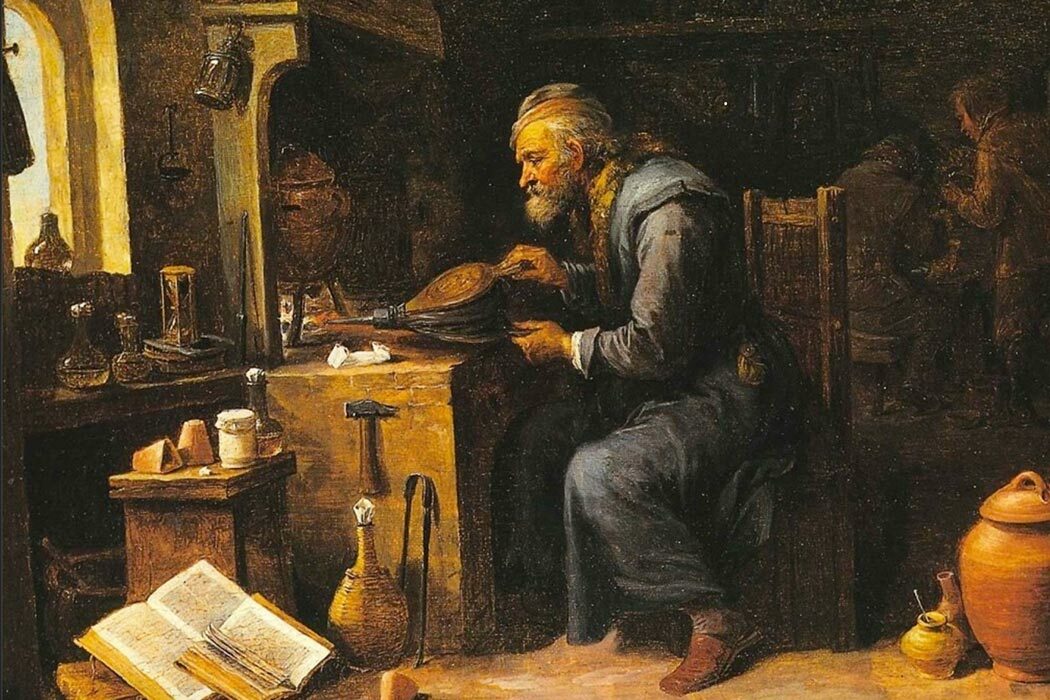
At their best, artists create alchemy. The medieval alchemists sought the philosopher’s stone that would convert lead into gold. Artists convert the mundane facts of human life into something sublime. It’s still human life; it’s still mundane; but in the hands of a master painter, writer, sculptor, or musician its inner light seeps through until that human moment in time glows with a golden light.
That’s what I strive for when I write. I don’t often get there, but sometimes—just sometimes—everything comes together and something special happens. Between my own creativity and the spark of the Holy Spirit, the words catch fire and become revelatory. A connection is made between the artist and the reader. The lead becomes gold. That’s why I keep fumbling about with words: I’m always trying to grasp that elusive philosopher’s stone and capture that moment of elation when I know I have said what I want to say exactly the way I want to say it. When I see the light go on in the eyes of a reader or hearer of my words, the circle is complete. The alchemy has happened. The Incarnation is new again.

-
Community UCC
-
Schwarzwald UCC
-
Trinity UCC
Office Hours
Contact
© 2026 Community UCC. All Rights Reserved.
|
Login
powered by
Website Developed by Tithely